Principles and Propositions
Reflections on ideology, tribalism, and partisanship

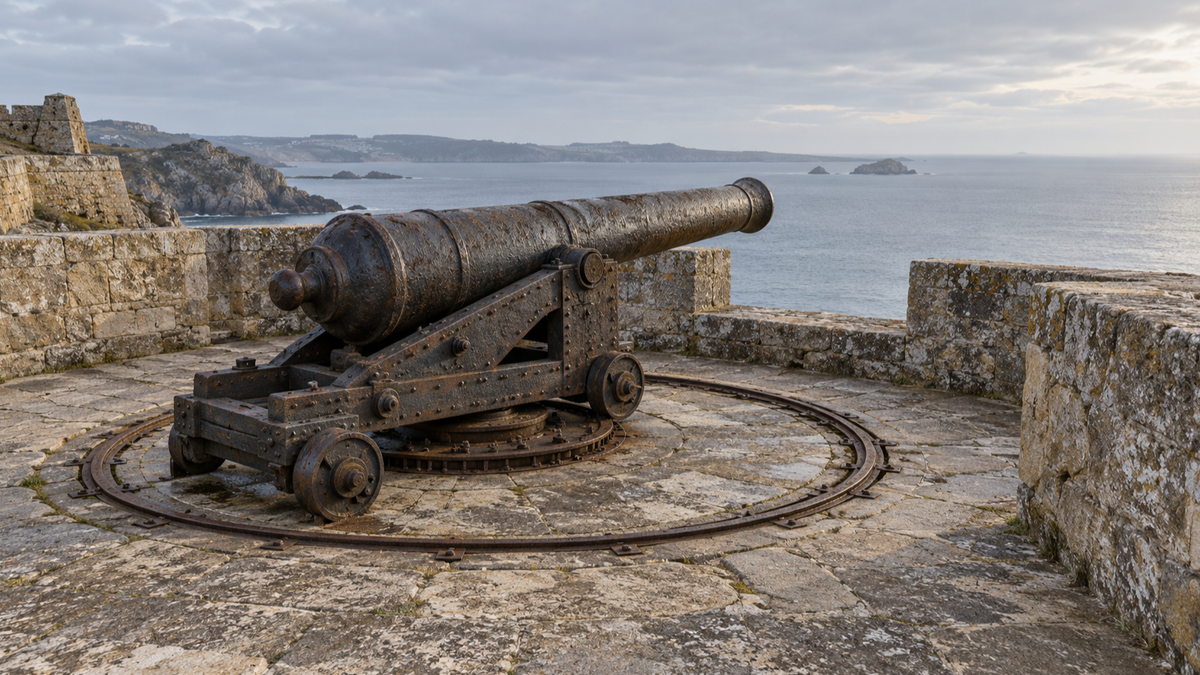
John Lukacs once wrote that ideology is like a cannon that is fixed in place and thus can only be fired in one direction. Principles, on the other hand, are like a cannon on a rotating platform, which can be aimed anywhere and fired at anyone who attacks the truths that those principles distill.
As the 2026 midterm elections rapidly approach and the debates among factions of conservatives and politically minded Catholics on social media have reached fever pitch, I was reminded of Lukacs’s metaphor. I was reminded, too, that our preconceptions, ideologies, tribalisms, and partisanship may warp our imagination and will and thus our reason so thoroughly that even those who might desire to take a principled stand may continue to fire their cannons in a single direction, because deconstructing their own ideologies, abandoning their tribalisms, and rejecting partisanship is more work than they are willing to do.
That may sound cynical, but at heart I am an optimist, as every Catholic should be. Like Samuel Johnson, whom Lukacs frequently paraphrased, I believe that most people are less in need of being instructed than in being reminded. That’s the guiding principle behind The Countermarch. And as a Catholic, I believe that truth is not only accessible to all but that most people will respond to the pull of the truth if they are reminded of it.
With that in mind, I offer the following propositions that flow from the principles I hold to be true. Do with them what you will.
- The U.S. Constitution is one of the greatest achievements in the history of governance.
- The U.S. Constitution is, in practice, a dead letter and has been for somewhere between 60 and 160 years.
- Breathing life back into the U.S. Constitution would be a very good thing.
- There is no possibility whatsoever that the U.S. Constitution can be revived in any meaningful way.
- The political, economic, and cultural elite of the United States is, as a whole, morally depraved, out for themselves, unconcerned with the common good, more committed to power than to principle, and unconcerned with the freedom, economic security, and dignity of the average American.
- The American people are, as a whole, morally depraved, out for themselves, unconcerned with the common good, more committed to power than to principle, and unconcerned with the freedom, economic security, and dignity of anyone other than themselves, including their neighbors and members of their own families.
- It would be a good thing for the political, economic, and cultural elite of the United States to be replaced by a new elite.
- Any new elite that would arise from the American people today would be worse than the current elite.
- The federal government is too large, too intrusive, ridiculously wasteful, riddled with corruption, and a greater threat to the freedom, economic security, and dignity of the American people than any supposed enemy of the United States, foreign or domestic.
- The centralization of economic power in the United States is unprecedented in the history of the world and a greater threat to the freedom, economic security, and dignity of the American people than any supposed enemy of the United States, foreign or domestic, with the possible exception of the federal government.
- Your freedom, economic security, and dignity, and that of your family and neighbors, depends more on your love for your family and neighbors, and their love for you, and your mutual willingness to sacrifice for one another, than it does on any national politician, federal law, or massive corporation.
- Communism is not in accordance with Catholic social teaching.
- Capitalism (which is not simply another name for economic freedom) is not in accordance with Catholic social teaching.
- A communist takeover of the United States would be a terrible thing.
- The threat of a communist takeover of the United States is nonexistent.
- The centralization of economic power in the United States is creating a greater threat to what we used to call “the American way of life” than communism ever did.
- The centralization of economic power in the United States has more in common with the historical practice of communism than it does with either economic freedom or Catholic social teaching.
- Mario Cuomo was a Catholic by virtue of his baptism and confirmation whose “personally opposed, but” position on abortion did not conform to Catholic teaching yet convinced many Catholics that they could vote for politicians who supported abortion on demand.
- Joe Biden is a Catholic by virtue of his baptism and confirmation who, for many decades, voted against federal funding for abortion before fully embracing Cuomo’s position in his last run for president, misleading many Catholics.
- J.D. Vance is a Catholic by virtue of his baptism and confirmation whose support for the expanded distribution of abortion drugs and federal funding for IVF does not conform to Catholic teaching and is actively misleading many Catholics.
- In 1999, Donald Trump called Pat Buchanan a “Nazi” for the positions Buchanan took on immigration, trade, and foreign policy.
- In 2015, Donald Trump began campaigning on versions of Buchanan’s positions on immigration, trade, and foreign policy.
- In both 1999 and 2015, Donald Trump said what he thought would best promote the interests of Donald Trump.
- In 2015, only Donald Trump could have brought about the changes the Republican Party needed to make in order to survive and to return to advancing the interests of the American people.
- Donald Trump has destroyed the Republican Party, and the American people will pay the price.
- Joe Biden was a worse president than Donald Trump.
- Donald Trump is a worse president than Joe Biden.
- If the Democrats win one or both houses of Congress in the midterm elections, the country will suffer.
- If the Republicans retain one or both houses of Congress in the midterm elections, the country will suffer.
- The people of the United States, as a whole, were previously more Christian than they are now.
- The United States is not a Christian nation.
- The United States was never a Christian nation.
- The United States does not need to be a Christian nation for Christians to be able to love their country.
- The United States does not need to be a Christian nation for Christians to be able to practice their faith freely, and not just on Sundays or within the walls of their churches.
- John F. Kennedy was not a good husband nor a great president.
- John F. Kennedy would not have been a better husband nor a better president had he tried to make Catholicism the official religion of the United States.
- No one has to vote for a candidate who holds positions that the voter does not support.
- A voter can vote for a candidate who holds positions that the voter does not support.
- Nearly every candidate that nearly every American votes for in the midterm elections will hold at least one position that the voter does not support.
- Few, if any, Americans will have the opportunity to vote for a candidate in the midterm elections whose positions embrace every element of Catholic social teaching.
- When some elements of Catholic social teaching are violated, the effects are more grave than when other elements of Catholic social teaching are violated.
- The proposed violation of one element of Catholic social teaching by a candidate, no matter how grave the effects, does not excuse the proposed violation of another element of Catholic social teaching by his or her opponent, even if the effects would be less grave.
- No Catholic may vote for evil because he or she supports that evil.
- Any Catholic, if he or she thinks there is a grave reason to do so that comports with Catholic social teaching, may vote for the “lesser of two evils.”
- No Catholic must vote for the “lesser of two evils.”
- The “lesser of two evils” is, by definition, still evil.
The Countermarch is a labor of love. If you found this essay thought-provoking or useful, please consider supporting the site.