Walking with Wendell Berry
Continuing the great conversation

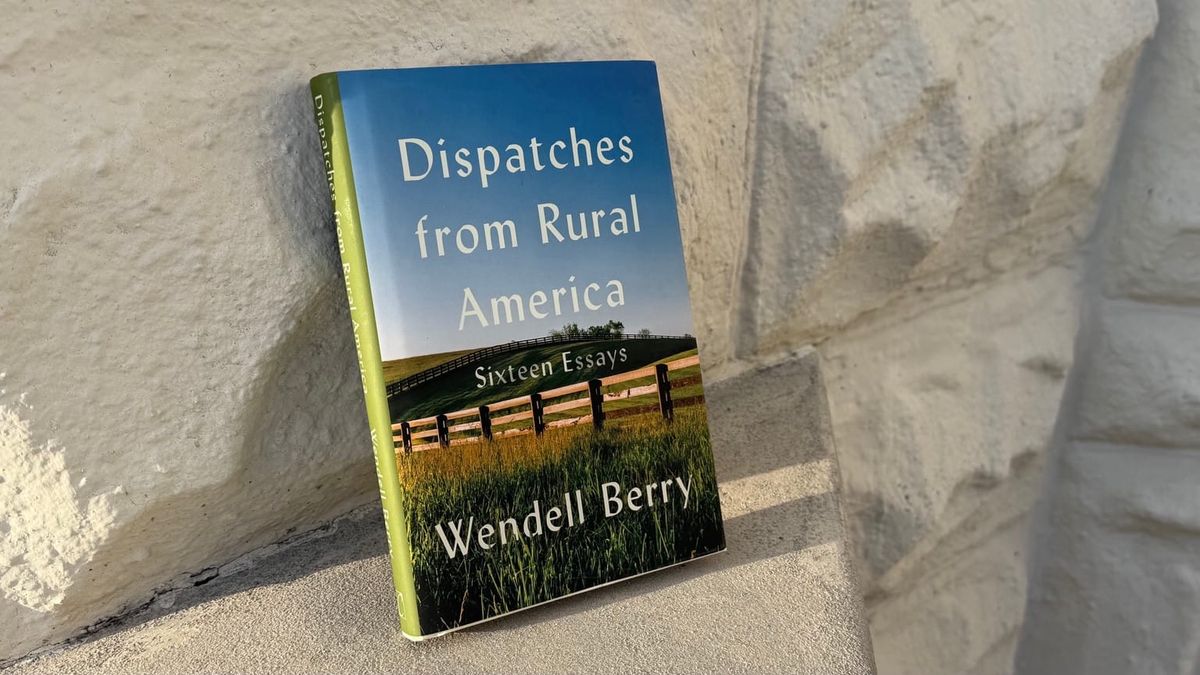
One approaches a beloved author’s final book of essays with trepidation, particularly when the author has lived as long and written as much (and as well) as Wendell Berry. It is natural to hope that the essays will all come together to form a fitting summation of the author’s corpus and to fear that they may instead be a collection of final thoughts that he had to get off of his chest while his heart still beat within it. And shaped by that hope and that fear, reviews of a final book often come down to one final judgment: Was it worthy of the man or not?
When I was younger, I fell into that trap myself. My review of Russell Kirk’s The Sword of Imagination (not a book of essays but a memoir) was marred by my own expectations of what those last words of a mentor whom I had been privileged to come to know, too, as a friend should have been. What I did not see then but had begun to perceive dimly by the time I reviewed John Lukacs’s final books (yes, plural) a quarter-century later has come into full focus as I consider Wendell Berry’s Dispatches from Rural America: The expectation that, at the end of his time here on earth, an author should package his life’s work and wrap it in a bow so that his longtime readers can experience a sense of closure is both fundamentally anti-intellectual and anti-Christian.
Anti-intellectual, because it treats an author’s life and his work the way a book collector might: Once you have acquired that final volume, you can put all of the author’s books together on a shelf and take them down, if at all, only when they need to be dusted. His work is now as complete as it will ever be: history at best; a museum piece at worst, to be treasured the way we might an old photograph of times past.
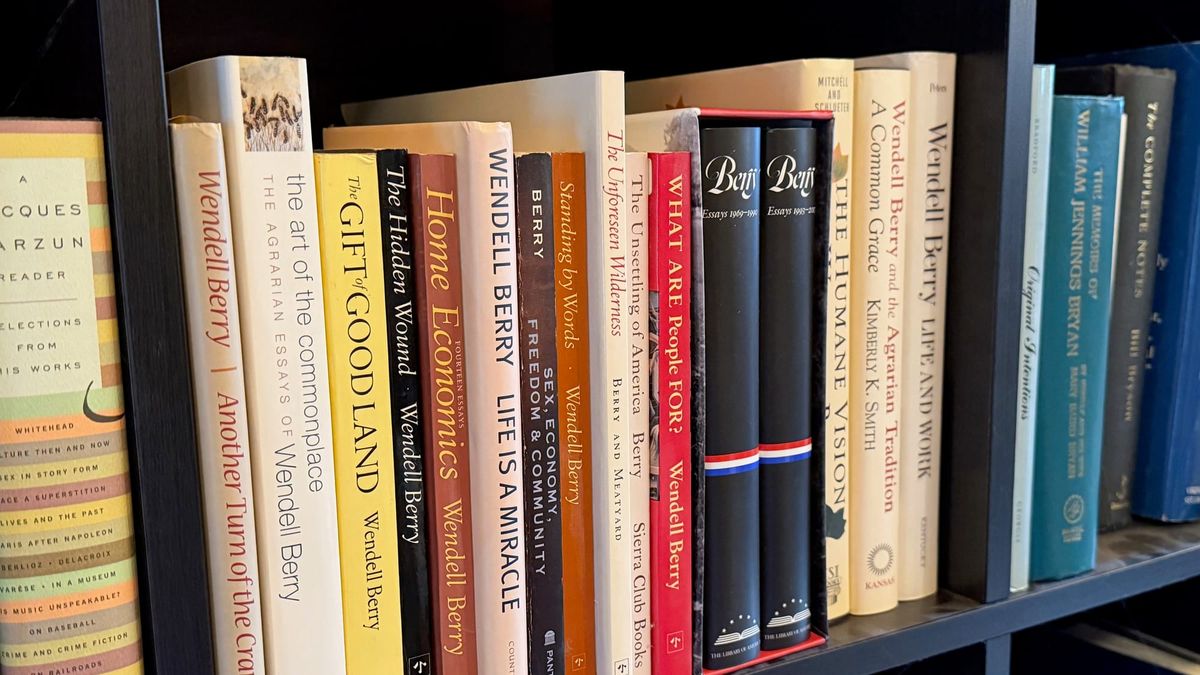
Anti-Christian, for all the same reasons it is anti-intellectual, but even more so, because, as Christians, we should understand that the dead still live, and they continue to speak to us in what they have left behind. Through a collection of essays that raises new questions instead of providing final answers, an author can continue the conversation with us from beyond the grave — and remind us that his earlier work, too, is not trapped in amber and doesn’t belong behind glass, properly classified and catalogued and labeled, but can be, if we continue to engage with it, an extension of his life and activity in this world long after he drew his last breath.
There are some writers who would prefer that everything they have published be placed on their funeral pyre and burned along with their bodies.[1] There are others who hope that their books will continue to be read in the vain (in both senses of the word) hope that they will continue to be remembered. But writers like Wendell Berry — and John Lukacs and Russell Kirk and Owen Barfield and Walker Percy and G.K. Chesterton and C.S. Lewis — write not just to engage those who will read their work while they are alive or to overcome a fear of their own mortality but to be part of the great conversation that they entered midstream and that they know will continue long after they can no longer put pencil to paper.
With that in mind, I have decided to do something rather different with Mr. Berry’s Dispatches from Rural America. Rather than offering a summary review concluding with a thumbs up or a thumbs down, over the next few weeks (and perhaps longer) I will engage with many, though not all, of the individual essays in the book and treat them not as ends in themselves but as living contributions to an ongoing conversation. I will publish each of my own essays separately on The Countermarch but also link to them from this article.
If you would like to join in the conversation, pick up a copy of Dispatches from Rural America from your local bookstore or order it through the Bookshop.org link on this page. And make sure that you subscribe to The Countermarch newsletter. While I have long encouraged readers never to read the comments, in the spirit of continuing the conversation with Mr. Berry’s ghost, I will enable comments on these particular pieces for members who are logged in to The Countermarch.
Let’s take a walk through rural America with Mr. Berry and see where our path might take us.
I use the word published here deliberately to refer to the work that they chose to make public rather than notes and drafts and diaries and letters that they did not intend the world to see. Friendship, charity, and — I would go so far to say — piety should compel us to respect the stated desire of an author to destroy his private papers upon his death. ↩︎
More on Wendell Berry
 Scott P. Richert
 Scott P. Richert
 Scott P. Richert