Seasons of Life
Becoming aware of when you are

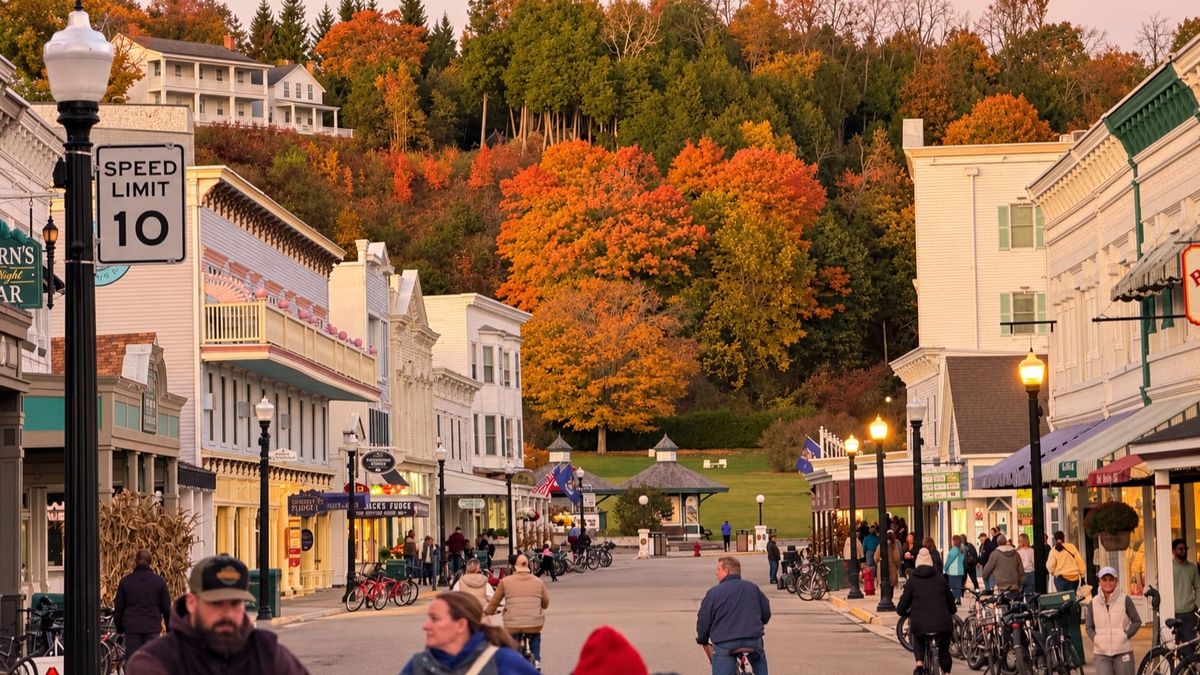
Since we moved to Huntington, Indiana, in 2017, our experience of fall has been mixed. Northeast Indiana, like the rest of the Midwest, cycles through all four seasons; but in both Michigan and Northern Illinois, where Amy and I lived for all but five years of our lives before moving to Huntington, the cycle is more regular, especially when it comes to the fall colors.
Here in Huntington, the leaves may change early, late, or not at all, sometimes going from green to brown with little color in between, depending on whether the weather stays warm or the first frost comes early, and how much rain we get during the late summer and early fall. This year, throughout the Midwest, the leaves are changing late, and Indiana has had an unusually wet fall, so the colors are coming in beautifully. Just when we need it to, Huntington feels like home.
Perhaps it is because I’ve spent all but five years of my life in the Midwest, but I can’t imagine living anywhere without four distinct seasons. And yet, as I near the end of my sixth decade on this earth, I realize that my experience of the seasons has become attenuated, more distant than it was when I was young, or even just twenty years ago, and not just because of the hit-or-miss color of the leaves in Huntington. My experience is, rather, part and parcel of the general abstraction of man from nature that has been driven by industrialism and technology throughout my lifetime, accelerating with the rise of the internet, smartphones, and social media.
When I was young, we ate fresh fruits and vegetables in season, and canned or preserved them (and later froze them) to eat in a different form from late fall through the early spring. A “vine-ripened” tomato wasn’t a marketing term; it was a tangy, juicy reality that reached the heart of its glory in mid-August. In the winter, we made soups and stews with the tomatoes my mother had canned when they were in season. The meat we ate was seasonal, too: My grandparents raised a few head of cattle, and my parents would get a side of beef every year or two. Pork and chicken prices fluctuated with the seasons; hams graced the table in the winter and spring because they were cured. We did purchase industrially canned and frozen food, but mass-produced frozen vegetables didn’t match the quality of home-frozen ones until just a couple of decades ago. Home-canned plums and peaches and pears and applesauce, and homemade sauerkraut and pickles and jams and jellies, carried the bounty of the summer throughout the year.
High-end restaurants today charge enormous prices for serving local, seasonal food. They call it farm-to-table; we called it supper.
The homogenization of food, the reduction to the lowest common denominator through industrial farming and processing and packaging that allows us to eat whatever we want whenever we want as long as we don’t care whether it tastes like it should, has been mirrored by (and arguably helped drive) the homogenization of culture in general. When I was young, television was already taking its toll on community life, but summertime was a time of reruns, when the commissars of culture in Hollywood still expected that most people would have something better to do while the weather was warm and the days were long. The summer blockbuster film and the summer TV miniseries both took hold in my teenage years, as Hollywood tried to counter the call of nature with the promise of prepackaged entertainment. The introduction of new series and new seasons of shows year-round was made possible by the advent of streaming services, but the trend was already well under way before high-speed internet became widely available.
All of us crave (to varying degrees) uniformity, regularity, predictability. Yet all of us desire (to varying degrees) new experiences, unusual flavors, serendipitous discoveries. The abundant choices we’re offered every day — the literal and metaphorical fruits of industrialism and technology — are presented as a means of fulfilling those desires, but in reality, that abundance is overwhelming, and most of us return most of the time to the same uniform, regular, predictable subset of choices that we’ve been choosing for decades.
Americans in general have more options available to us than ever before, but the difference in the pattern of our lives between any two average days in, say, March and September or July and December is negligible. We work the same hours, watch the same shows, eat the same food, keep our windows closed, set our thermostats to the same temperature, and wear the same clothes.
On more than a few occasions over the last twenty or thirty years, I have been going about my day when I suddenly realize that I have become, for lack of a better phrase, unstuck in time — not like Billy Pilgrim in Kurt Vonnegut’s Slaughterhouse-Five (much less, alas, like Si Morley in Jack Finney’s Time and Again and From Time to Time or Christopher Reeves’ character in Somewhere in Time) but simply unable, should someone ask me at that very moment, to tell him what month or even what season it is. If I happen to be walking outside, the experience doesn’t last long — a quick glance at the grass and the sky and the trees reminds me when I am — but it may take thirty seconds or so if I’ve been immersed in work or watching TV or reading something on my phone. This experience may be akin to one of those “secret weird things” that John Siracusa and Merlin Mann discuss frequently on their podcast Reconcilable Differences — something that few, if any, other people have experienced — but I suspect that it may not be all that uncommon in our world today, as every aspect of our lives has become more homogenized through our abstraction from nature. Indeed, most of those who might be similarly affected may not even realize it, because the passage of the months and the cycle of the seasons have become the brilliant autumn forest we can no longer see for the straight, monocultural rows of trees of our days.
Like everything else in our world, the cycle of the seasons was made for man, and the less aware we are of the budding of the trees and the changing of leaves and the lengthening and shortening of days and when asparagus and blueberries and tomatoes are meant to be eaten and the life cycles of cattle and chicken and pigs, the less we understand ourselves. Mediocre food, available in abundance year-round, leads to mediocre taste and mediocre culture.
Thirty years ago, my answer to this abstraction and homogenization would have been simplistic, which is not to say simple (and certainly not to say easy): Grow at least some portion of your own food; preserve some of it for the winter; shop at farmers’ markets when you can. Be deliberate in your media consumption; read more; play games with your children.
All of those are still good things to do, and Amy and I still try to do each of them to some extent, some years more successfully than others; but the advance of industrialism and technology has made every one of them harder in some way — and all of them harder in the sense that our desires have been shaped and changed by the habits we have developed over the last few decades. Every generation feigns surprise when the next generation doesn’t want the same things or experiences that excited us at their age; but in most cases, the desires of the next generation have been shaped by what they see us doing or not doing, eating or not eating, watching or not reading now. With all due respect to that great scholar of human nature Jimmy Buffett, it would be more correct to say that we are the people our children’s parents warned them about.[1]
I admire young people who still have the desire and the energy to become rooted, to break free from the abstraction and homogenization of our culture, to align their lives with the cycles of the seasons. We older folks need to revive that desire first; the energy will follow.
The good news is that you can revive that desire by doing less, rather than more. Don’t buy that tomato in December. Don’t turn on the TV when you wake or when you get home from work. Don’t turn on the heat or the air conditioning if you don’t need to. Don’t keep your drapes drawn and your windows closed. Don’t drive when you can walk. Don’t put in your AirPods when you can listen to the rustling of the leaves and the sound of the geese heading south for the winter. Don’t walk with your head down but look up at the changing leaves. Don’t pull out the leaf blower until you have raked as many leaves as you can. Don’t complain about the heat or the cold or the wind or the rain. This is the day that the LORD has made; let us rejoice and be glad in it (Psalm 118:24).
This past weekend, even as Huntington is starting to explode with color, Amy and I drove north to Michigan for three days on Mackinac Island. We’ve been to the island in every season except winter, yet fall remains my favorite, and not just because I enjoy the colors and the brisk, occasionally gale-force winds that barrel through the Straits of Mackinac. In the last weeks of October, the restaurants and hotels and stores are preparing to close for the season, and the population of the island drops to the few hundred people who live there year-round. Supplies are coming over on the ferries from the mainland, preparing for that stretch toward the end of the year when the ice builds up on the Straits, making small craft travel dangerous, and before the ice bridge between St. Ignace and the island freezes over, allowing travel by snowmobile across the Straits.
On the island, you cannot escape the seasons, nor live your life abstracted from them. Even a few days there in mid to late October is enough to reground me in when I am, to (so to speak) re-season me. Fall is here now, and I am in fall, and the seasons of life continue.
If it didn’t click for you the first time, read it again. ↩︎
I earn a commission on qualifying purchases made through the Bookshop.org links below.