Leisure and the Lake
Cultivating the sound of silence

“I haven’t seen Tom and Janet at Mass lately.”
“Oh, they’re probably up at the lake.”
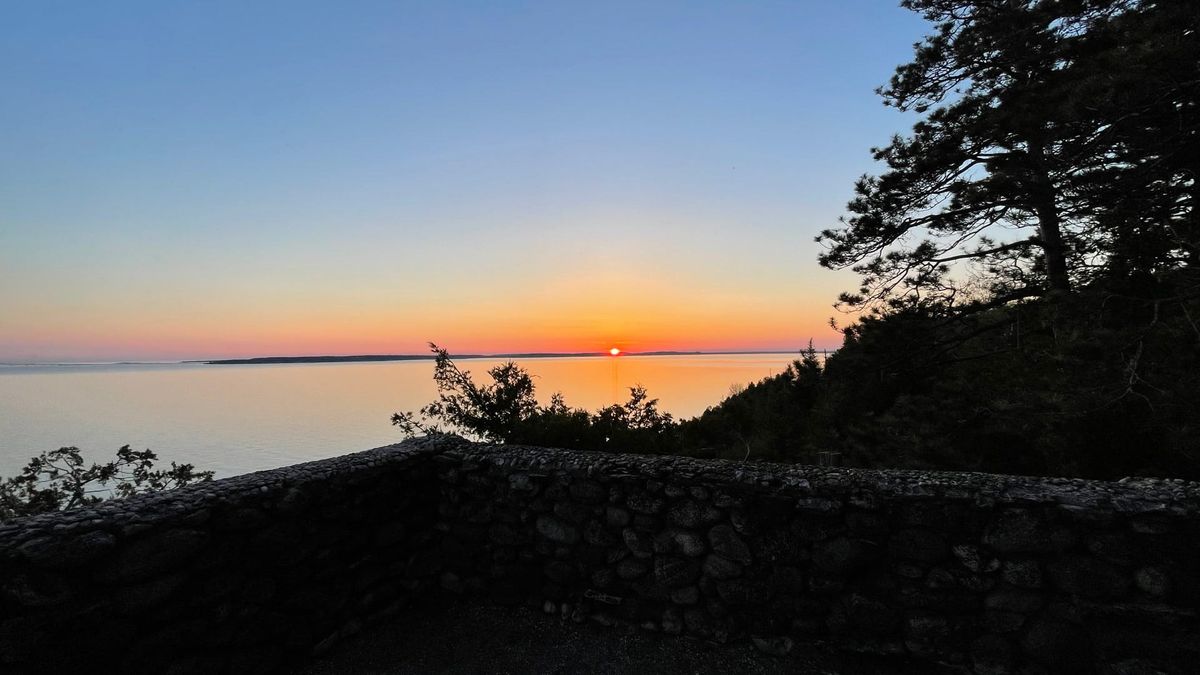
Almost everyone who lives in the Midwest has heard an exchange like this dozens, if not hundreds, of times. Depending on which state you call home — Michigan, Indiana, Minnesota, Wisconsin, northern Illinois (and perhaps northern Iowa?) — the response might be a bit different: “up at the cabin,” “up at the cottage,” or just “up north.” It always means the same thing, though: Tom and Janet have a summer place, generally modest, north of wherever they live, within at least sight of a lake.
My paternal grandparents had a cottage on Hess Lake. We didn’t visit it often, but some of my aunts and uncles and cousins did. Amy’s grandparents summered on Higgins Lake, eventually retiring there. On my mother’s side, heading up north meant camping or parking the school bus that Uncle Paul had converted into a makeshift RV at Cadillac for the summer. My sisters and I grew up just a mile or so from Lake Michigan, so our lake culture was local, and many years later, when Amy and the kids and I lived in Rockford, Illinois, we kept my preference for “the Big Lake” and spent our summer vacations in Door County, Wisconsin, and, eventually, the Upper Peninsula of Michigan.
The lake house was born of necessity in the late 19th and early 20th centuries, before air conditioning became common. During the summer, mothers and children would go to the lake, and the men would often stay in town, coming up for the weekend in June and July, before closing up shop and staying for all of August (a tradition still alive today in much of Europe). Scenes at cottages and cabins were common in Midwestern literature, perhaps most famously in Sinclair Lewis’s Main Street.
Over time, going up north evolved along class lines. Businessmen, bankers, and other professionals would go further north, and their “cottages” might rival their city homes. Jacob and Sarah Dick, who built the house we live in here in Huntington, Indiana, summered in Petoskey, Michigan. Other prominent Huntington families took up residence at the Grand Hotel on Mackinac Island, a fact that plays a role in Edith Kneipple Roberts’ novel That Hagen Girl (which, though set in the fictional town of Jordan, Ohio, was based on Huntington, where Roberts grew up). Later, as union wages increased the lot of blue-collar workers (particularly autoworkers in Michigan), heading up north became more democratized.
Tent or camper (or converted school bus); cabin or cottage or sprawling Saint Anne in Petoskey or Charlevoix or on the east or west bluffs of Mackinac Island; one of Minnesota’s 10,000 lakes or any of the Great Lakes: All lake culture throughout the Midwest had at least one thing in common — leisure.
As a word, leisure has fallen into disuse, which is hardly surprising, since the reality that it encapsulates has as well. The few remaining uses of the term — in such phrases as “at your leisure” — are all vaguely pejorative. We waste an incredible amount of time watching TV, playing video games, and doomscrolling on our phones, but none of those activities can reasonably be called leisure (even if some people might still say that they are how we fill our “leisure time”).
Summers at the lake were born of necessity, but they provided a place and a time that were more conducive to reading, to writing, to conversation, to contemplation, to communing with nature. The August vacation strengthened family bonds, not just between parents and children but across generations. It broke the regular patterns of everyday life and gave you both physical and temporal distance to reflect on your work and on your relationships.
In other words, going up north gave you all of the things that we so desperately need in our lives today.
Josef Pieper was a German, not a Midwesterner, and he did not have lake houses but something more elevated in mind when he wrote the two essays that form Leisure, the Basis of Culture. By the time that the English edition was published in 1952 (with an introduction by T.S. Eliot), leisure was on its way to denoting “leisure suits” and engaging in “leisure activities” like a friendly game of Twister.
But Pieper no doubt understood the importance of the August vacation, of days that seem endless and night skies so dark that you can see the Milky Way. Those who still head up north today find it next to impossible to unplug, to leave their work behind, to sit quietly with their thoughts, much less to elevate those thoughts to the celestial sphere and beyond. When I purchased my first iPhone in 2007, I saw it as an instrument of freedom that would allow me to be away from my office for ten days or two weeks — and, for a few summers, it did.
Eventually, though, it became a pathway for work to invade my leisure time, to the point where, while on vacation, I had to set one deliberate, short period each day when I would check my email before using a focus mode to disable all notifications and work apps. Once I did so, I quickly discovered that everyone else could get along without me. That should be a cheerful thought, but the culture of work today is such that most people dread the possibility that they aren’t always needed. Anxiety draws us back and keeps us from embracing the opportunity for leisure, the silence that allows us to read, to think, to write, to reflect, to contemplate that which will remain when our daily work is long forgotten.
C.S. Lewis’s Screwtape writes to Wormwood that “It is funny how mortals always picture us as putting things into their minds: in reality our best work is done by keeping things out.” We do Screwtape’s work for him, filling those moments when leisure should bring thoughts of the eternal to mind with an endless stream of sound and fury, signifying nothing — nothing of any lasting value, at least. We may feel guilty or empty for spending too much time on social media or watching TV or playing video games, but if we seek a remedy for that guilt and emptiness, we almost always turn to work rather than to reading or a walk in the woods (with no music or podcast playing in our ears) or an hour in front of the Blessed Sacrament.
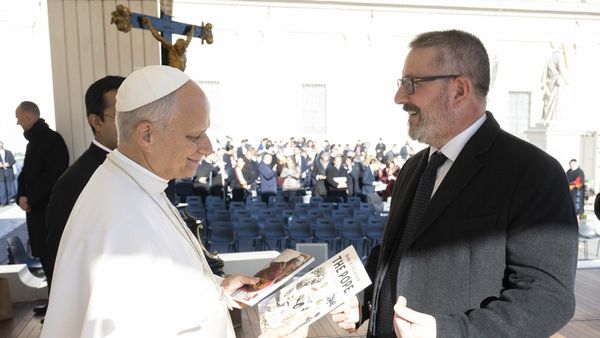
Man was made to work and to pray, but our ora should inform our labora. That Pope Leo XIV returned this summer to the papal “cottage” in the lake town of Castel Gandolfo is, to my mind, one of the best signs that this pontificate may be what the Church — and the world — needs today. May we take his example to heart and find a time and a place (on a lake or elsewhere) to rediscover the true meaning of leisure — and to let it change our lives.
The Countermarch is a labor of love. If you liked what you read, please consider supporting the site.